Google Just Changed How Every Business Gets Found Forever.
By Peter Roberto · GoTo Membership · June 2026 ·
I’ve spent years working at the intersection of digital marketing, local search, and Google’s ever-shifting algorithm. I’ve watched businesses win and lose not because of their product, but because of how visible or invisible they were online.
What happened at Google I/O 2026 on 19 May is the biggest shift I’ve seen in over a decade.
And most business owners have absolutely no idea it’s coming for them.
What Google Announced at I/O 2026
Google I/O is the company’s annual developer conference the place where they reveal where search is going, not just where it currently is. This year’s event, held on 19–20 May at the Shoreline Amphitheatre in Mountain View, California, was arguably the most consequential in the company’s history for local businesses.
Three announcements stand above everything else.
1. The Search Box Has Been Rebuilt for the First Time in 25 Years
Google announced the biggest upgrade to its Search box since the late 1990s. The search bar now accommodates long, conversational queries — the way you’d speak to a human assistant. Keywords are dead. Intent is everything. People are no longer typing “dentist Manchester.” They’re asking: “Which dentist near me is taking new patients, has strong reviews, and can see me this week?” Google now answers that directly — and picks the winner for them.
2. AI Mode Is Now Global — Powered by Gemini 3.5
Google upgraded its AI Mode with Gemini 3.5 Flash as the new default model, rolled out to nearly 200 countries. This is the engine that now synthesises your entire online presence and delivers a verdict to potential customers before they click a single link. Your profile, your reviews, your website, your photos — all processed and judged in seconds.
3. Autonomous Search Agents — Google Searches On Your Customer’s Behalf
This is the one that changes everything. Google introduced “Search Agents” — autonomous AI tools that operate 24/7, monitoring topics and making recommendations even when the user’s phone is locked. A potential customer can now instruct a Google agent to find them “the best roofing company in Sheffield” and that agent will research, evaluate sources, and return with a shortlist. Your business either makes that list or it doesn’t. There is no page 2. There is no second chance.
How Google Now Decides Who Gets Found
Before I get into what to do, you need to understand how Google evaluates your business. There are three core pillars. They haven’t changed. What’s changed is how ruthlessly Google enforces them — and how much the AI layer amplifies the gap between businesses that have done the work and those that haven’t.
Relevance — Does your profile match what someone searched for?
Distance — How close is your business to where the customer is searching from?
Prominence — How trusted and well-known is your business across the internet?
Prominence is where the real battle is fought. And it’s where most businesses are losing without realising it.
The 8 Ranking Signals You Need to Own
1. Primary Category — The #1 Signal on Your Entire Profile
Choosing the wrong primary category is the single most damaging ranking mistake you can make. It was ranked the number one negative ranking factor across 149 signals tested in the 2026 Local Search Ranking Factors study. Your primary category must describe your core business precisely. Not a side service. Not an aspiration. Your core.
2. Review Velocity and Recency
A bank of old reviews is no longer enough. Google wants to see a consistent, ongoing flow. Businesses with more than 200 reviews are significantly more likely to appear in the top 3 positions. More importantly, review recency matters profiles with steady weekly reviews consistently outperform those with sporadic bursts.
3. Profile Completeness
Every field filled. Every service listed individually with its own description. Business description keyword-rich and customer-facing. Hours accurate. Zero empty sections. Fully optimised profiles appear 80% more often in search results and generate 4× more website visits than incomplete ones.
4. Photos and Visual Content
Real photos, not stock imagery. Google tracks engagement on images — click rates, view counts, dwell time. Profiles that go 30+ days without new visual content are showing measurable ranking drops in 2026. Fresh visuals signal an active, trustworthy business.
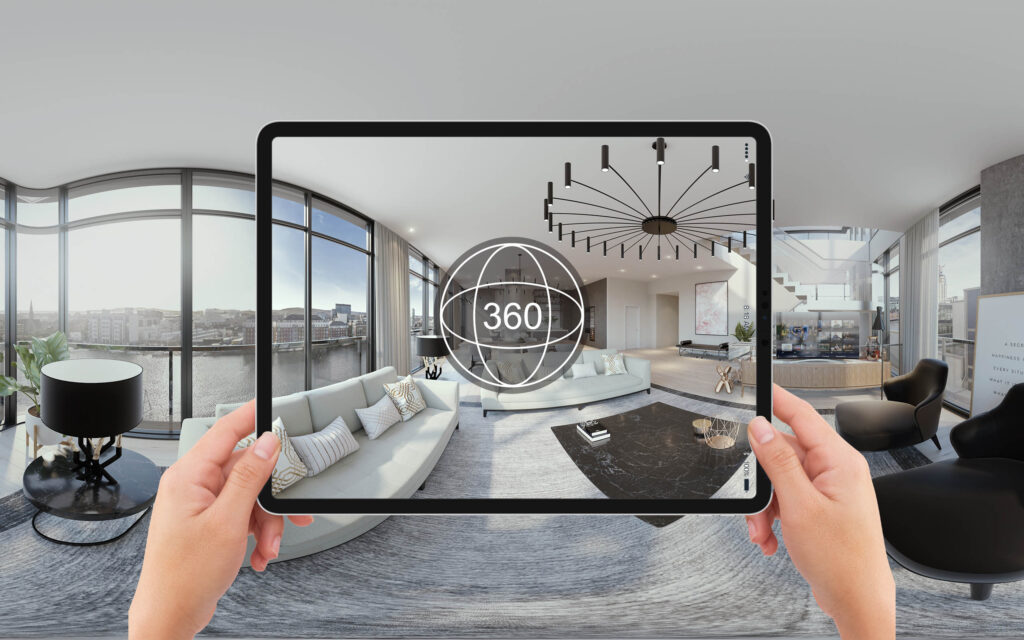
5. 360° Virtual Tour
Listings with a Google Street View virtual tour generate 2× more interest, 42% more direction requests, and 35% more website click-throughs than listings with standard photos alone. More on this below — it is your single biggest competitive advantage right now.
6. Messaging Response Speed
Confirmed as a ranking factor since late 2025. Businesses that respond to Google Business Profile messages quickly are algorithmically rewarded. Slow responders are quietly penalised. This is a lever most businesses aren’t even aware of.
7. NAP Consistency
Your Name, Address, and Phone number must be identical across every directory, social profile, and website on the internet. One inconsistency tells Google your business data can’t be trusted — and that weakens your entire local ranking potential.
8. Dedicated Service Pages on Your Website
The number one local ranking factor across all 149 signals in the Whitespark 2026 study. One page per service. Not a list on your homepage — individual, detailed pages Google can index, understand, and match to specific search queries.
The 360° Virtual Tour: Your Biggest Untapped Advantage
Here’s what most of your competitors haven’t figured out yet.
Google doesn’t just rank businesses on information. It ranks them on engagement. How long do people look at your profile? Do they click? Do they ask for directions? Do they call? Every action a user takes on your listing sends a signal back to Google’s algorithm that says: this business is worth showing to more people.
A 360° virtual tour — published directly to your Google Business Profile via a Google Street View Trusted Photographer — keeps people on your listing longer, answers questions they haven’t asked yet, and builds instant visual trust before they’ve spoken to you.
The numbers speak clearly:
- 42% more direction requests vs standard photo listings
- 35% more website click-throughs
- 2× more interest generated vs profiles without a tour
- Higher dwell time on your profile a direct engagement signal Google measures and rewards
- Works inside Google Maps, Google Search, and Google Street View
In the new AI search landscape, where Google’s agents are autonomously building shortlists for customers, a business with a complete, visually rich, tour-enabled profile looks dramatically more credible than one without. The tour is proof. Everything else is just a claim.
In 2026, your Google Business Profile isn’t a directory listing. It’s your most important digital asset. Treat it like one.
How to Show Up in Google’s AI Results
Google’s AI Overviews now appear above traditional search results, above the local map pack, and above paid ads for roughly 25% of all searches. For certain local service queries, that trigger rate approaches 50%. The businesses cited in those AI summaries capture the attention. Everyone else disappears.
To be cited by Google’s AI, you need what Google calls E-E-A-T: Experience, Expertise, Authority, and Trust. For a local business, this means:
- Content written by or attributed to real, named people with verifiable expertise in your field
- Credentials, licences, certifications, and professional memberships visible on your website and Google profile
- Citations from credible local sources — regional press, industry associations, authoritative local directories
- Schema markup on your website so Google can automatically read and understand your credentials
- FAQ content that directly answers the questions your customers type into Google
- Regular content updates — AI systems cite newer content more frequently; stale pages are deprioritised
- Review language that matches real search intent “great communication”, “professional team”, “transparent pricing”
Local discovery no longer happens in one place. People move between Google Maps, AI answers, social platforms, and review sites often without clicking through to a website at all. Your business needs to be visible and credible across every surface. That’s not optional anymore. That’s the baseline.
The Metrics Google Measures — And You Should Be Tracking
These are the signals feeding Google’s algorithm every single day:
- Search impressions (how often your profile appears in results)
- Profile views split between Maps and Search
- Direction requests and phone call clicks
- Website clicks from your profile
- Photo views vs competitor photo views
- Review volume, average rating, and recency trend
- Message response rate and speed
- Post engagement and booking clicks
If you’re not tracking these monthly, you’re flying blind. And if you don’t know where you stand against your local competitors on each of these that’s a problem worth fixing urgently.
What Most Businesses Are Getting Wrong Right Now
I see the same mistakes repeatedly.
Businesses that set up their Google profile two years ago and haven’t touched it since. Review requests that never get sent because there’s no system for it. Photos uploaded once, never updated. No 360° tour. No dedicated service pages on the website. NAP data inconsistent across directories. And a website that answers none of the questions their customers are actually typing into Google.
Meanwhile, Google’s AI is getting smarter every quarter. The gap between businesses that have invested in their digital presence and those that haven’t is growing — fast. Every month you wait is a month your competitor builds an advantage that compounds.
The businesses dominating local search in 2026 are not gaming Google. They’re building genuine trust signals across the full ecosystem: their profile, their website, their reviews, their visual content, their citations. And they’re maintaining it consistently, month after month after month.
That’s not a set-it-and-forget-it task. It’s an ongoing discipline. And it’s exactly what GoTo Membership was built to deliver.
The Bottom Line
Google I/O 2026 confirmed what I’ve been telling business owners for two years: search has fundamentally changed. It’s no longer about keywords and link clicks. It’s about being the business that Google’s AI trusts enough to recommend automatically, autonomously, before a customer has even finished forming their question.
The businesses that will dominate local search over the next five years are treating their Google presence with the same seriousness they treat their physical premises. Complete profiles. Reviews flowing consistently. Rich visual content. A 360° tour that builds instant trust. A website that answers every question Google’s AI might ask on a customer’s behalf.
Everything else is noise.
If you want help building that presence the right way, from the ground up visit www.gotomembership.uk and let’s get to work.
GoTo Membership
Google Business Profile Management 360° Virtual Tours · Local SEO · AI Search Visibility